The world of card games is vast and varied, ranging from casual family pastimes to high stakes professional tournaments. Among these, blackjack holds a unique position. While games like poker, baccarat, and rummy all utilize the standard fifty two card deck, the mechanics, objectives, and underlying philosophies of blackjack set it apart in significant ways. Understanding these differences is essential for any player looking to transition from one discipline to another or for those simply curious about the mathematical and social dynamics of the casino floor.
The Singular Objective of the Game
In most card games, the primary goal involves competing against other players to form the strongest hand. In games like Texas Holdem or Seven Card Stud, your success is directly tied to the failure of your peers. Blackjack operates on an entirely different premise.
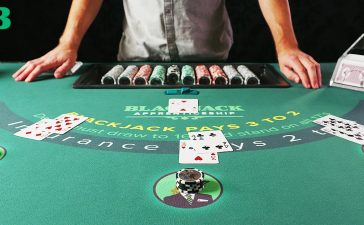
Blackjack is fundamentally a game played against the house, represented by the dealer. Even if there are seven people sitting at a semicircular table, they are not competing with one another. Each player is engaged in an independent battle to have a hand total closer to twenty one than the dealer, without exceeding that number. This lack of interpersonal competition changes the psychological landscape of the game. You do not need to bluff your neighbor or worry about their specific holding, provided their actions do not mathematically impact the remaining cards in a way that affects your strategy.
The Mathematical Nature of the House Edge
One of the most profound differences between blackjack and other card games is the nature of the house edge. In games like slots or roulette, the edge is fixed and immutable. In poker, there is no house edge in the traditional sense; instead, the house takes a rake or a percentage of the pot as a service fee for facilitating the game.
Blackjack occupies a middle ground. While there is a built in advantage for the casino because the player must act first and loses regardless of the dealer’s subsequent hand if they bust, this edge is fluid. Through the use of basic strategy, which is the mathematically optimal way to play every possible hand against every possible dealer upcard, a player can reduce the house edge to less than one percent. In contrast, games like baccarat have a fixed edge that cannot be altered by player skill or decision making.
Fixed Rules for the Dealer
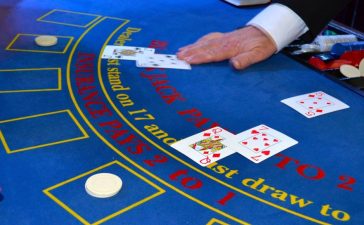
Unlike poker, where a player or dealer can act with total autonomy and unpredictability, the blackjack dealer is bound by a strict set of procedural rules. These rules are usually printed directly on the felt of the table.
In almost every casino, the dealer must hit on any total of sixteen or less and stand on any total of seventeen or more. Some variations require the dealer to hit on a soft seventeen, which is a hand totaling seventeen that includes an ace valued at eleven. This lack of agency on the part of the dealer is a stark contrast to games like bridge or spades, where every participant is trying to use their intuition and tactical prowess to outmaneuver the opposition. In blackjack, the dealer is a biological machine executing a pre programmed algorithm, allowing the player to make highly calculated decisions based on known probabilities.
The Role of Information and Known Variables
Information in card games can be categorized as known or unknown. In poker, almost all information about your opponents hands is unknown, hidden behind their physical tells and betting patterns. In blackjack, the player is provided with a crucial piece of information: the dealer’s upcard.
This single visible card dictates the entire strategy for the hand. Because the player knows the dealer’s rules, they can calculate the likelihood of the dealer busting or reaching a high total. Other popular games like rummy or hearts rely on tracking cards that have been discarded or played to infer what remains in opponents hands. While card counting exists in blackjack to track the ratio of high cards to low cards, the immediate tactical decision is driven by the visible upcard, a mechanic rarely found in such a binary format in other games.
Betting Structures and Mid Hand Options
The way money moves in blackjack is also distinct from its contemporaries. In a standard game of poker, betting occurs in rounds, and players can raise the stakes based on their confidence or their desire to force an opponent to fold. In blackjack, the initial bet is placed before any cards are dealt, but the game allows for unique mid hand adjustments.
-
Doubling Down: This allows a player to double their initial bet in exchange for agreeing to receive exactly one more card. This is typically done when the player has a strong starting total like ten or eleven.
-
Splitting Pairs: If a player is dealt two cards of the same value, they can split them into two separate hands, placing an additional bet equal to the first.
-
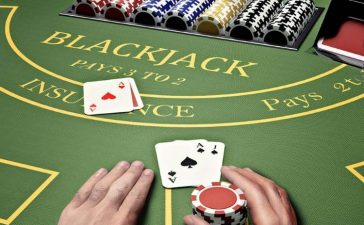
Insurance: This is a side bet offered when the dealer shows an ace, acting as a hedge against the dealer having a natural blackjack.
These options do not exist in games like baccarat or war, where the bet is placed and the outcome is determined without further player intervention. They also differ from poker raises because they are governed by specific hand compositions rather than purely psychological tactics.
The Concept of the Bust
The “bust” is perhaps the most iconic mechanic of blackjack and its closest relatives like Pontoon or Spanish 21. Most card games are about accumulation or shedding. In rummy, you want to get rid of cards; in bridge, you want to win tricks.
Blackjack is a game of brinkmanship. The risk of going over twenty one and losing immediately creates a tension that is absent from games where every hand eventually reaches a showdown. This creates a defensive layer of strategy where a player might choose to stand on a very weak hand, such as a twelve, simply because the dealer is showing a weak card like a five or six and is statistically likely to bust themselves. This “win by not losing” strategy is virtually non existent in other competitive card formats.
Social Dynamics and Table Etiquette
Because blackjack players are all fighting the same common enemy, the dealer, the social atmosphere is often more collaborative than in other games. In a poker game, the table is often quiet, and players are guarded. In blackjack, it is common for players to cheer for each other or collectively groan when the dealer draws a miracle card to beat the table.
However, this also leads to a unique phenomenon where players sometimes blame others for “taking the dealer’s bust card.” While mathematically the actions of one player do not affect the long term expected value of another, the perception of a shared deck creates a communal experience that is quite different from the isolated, individualistic nature of games like video poker or the aggressive confrontation of high level gin rummy.
Frequency of Decisions
Blackjack is a high volume game. In a fast paced environment, a dealer can get through sixty to one hundred rounds per hour. Compared to a game like bridge, which involves a lengthy bidding process and the playing of thirteen tricks, or poker, which involves multiple betting rounds and folding, blackjack provides a constant stream of rapid fire decisions. Every few seconds, the player is asked to make a choice: hit, stand, double, or split. This high frequency requires a different type of mental stamina and focus, as small errors in basic strategy can compound quickly over hundreds of hands.
FAQ
Is blackjack the only card game where you play against a dealer?
While blackjack is the most famous, other games like baccarat, three card poker, and ultimate Texas holdem also involve playing against the house or a dealer. However, blackjack is unique in the level of agency the player has over the final outcome of their hand through hitting or standing.
Why is an ace valued differently in blackjack than in games like poker?
In poker, an ace is usually either high or low. In blackjack, the ace is “fluid,” meaning it can count as one or eleven at any time to benefit the player. This dual value is what creates soft hands, allowing players to be more aggressive because they cannot bust with a single hit.
Do card counting techniques work in other card games?
Card counting is specifically effective in blackjack because it is a game of “dependent events,” where the cards removed from the deck change the odds of future hands. In games like poker, while you track cards to calculate “outs,” the deck is shuffled or the context is so different that traditional blackjack counting does not apply.
What is the difference between blackjack and twenty one?
Often the terms are used interchangeably, but twenty one is a broad category of games. Blackjack is a specific version with standardized rules, such as a three to two payout for a natural blackjack. Other versions like Spanish 21 use different decks or offer different bonus payouts for specific card combinations.
Can you tie in blackjack like you can in poker?
In blackjack, a tie is called a “push.” If both the player and the dealer have the same total, the player’s bet is returned with no win or loss. In poker, a tie results in a split pot. Some other casino games, like baccarat, have a specific tie bet that pays out at high odds.
Are the odds of winning in blackjack better than in other card games?
Statistically, blackjack offers some of the best odds in the casino for a player who uses basic strategy. The house edge is significantly lower than in games like Caribbean stud or even most versions of baccarat, making it a preferred choice for those looking to maximize their time at the table.
Does the number of decks used change how blackjack differs from other games?
Most card games use a single deck. Blackjack is often played with six or eight decks in a “shoe.” This increases the house edge slightly and makes it more difficult to track cards, whereas games like bridge or poker are almost strictly single deck affairs to maintain the integrity of hand distributions.