
In the early days of gambling, a slot machine was a purely mechanical device where the primary draw was the potential for a physical payout. Symbols were limited to horseshoes, bells, and fruits, and the “story” began and ended with the pull of a lever. Today, the industry has undergone a radical transformation. Modern slots are no longer just gambling devices; they are complex pieces of narrative entertainment that borrow heavily from the worlds of video games, cinema, and television. The integration of high-level themes and storytelling has become the primary tool for developer differentiation in a crowded marketplace, shifting the focus from simple math to a holistic player experience.
Moving Beyond the Fruit Machine
The transition from basic symbols to complex themes was driven by the shift from mechanical reels to video screens. Once developers were no longer limited by physical stops and gears, the screen became a canvas.
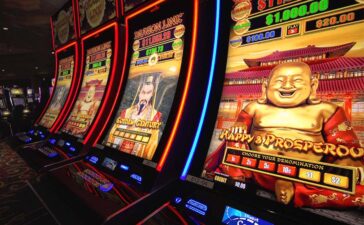
The early 2000s saw the rise of the “themed” slot, which utilized specific cultural motifs—most notably Ancient Egypt, Norse Mythology, and Asian folklore. These themes provided a familiar visual language for players. Ankhs, scarabs, and pyramids became shorthand for “adventure” and “mystery.” However, as the market became saturated with dozens of identical Egyptian-themed games, developers realized that visual flair alone was not enough to maintain player loyalty. They needed to engage the player’s imagination through narrative progression.
The Integration of Branded Content
One of the most significant leaps in slot evolution was the introduction of branded or licensed content. By partnering with major movie studios and music labels, developers could tap into existing fan bases.
-
Cinematic Immersion: Games based on blockbuster films like The Dark Knight or Jurassic Park use actual film footage, orchestral scores, and voice acting from the original cast. This creates a sense of “prestige” that a generic slot cannot match.
-
Nostalgia Factor: Branded slots often target specific demographics by using themes from the 1980s or 1990s, such as classic sitcoms or rock bands. The player is not just spinning for money; they are revisiting a piece of their personal history.
-
The Cost of Branding: While these games are highly attractive, they often come with a trade-off. Because the developer must pay a significant licensing fee to the brand owner, these machines sometimes have a slightly higher house edge or lower Return to Player (RTP) percentage compared to in-house developed titles.
Storytelling as a Gameplay Mechanic
Modern slot design now uses narrative to dictate how the game is actually played. This is often referred to as “gamification,” where the player must achieve certain story goals to unlock new features.
Leveling Up and Progression
In many contemporary slots, players “travel” through a map or unlock different “worlds.” As you play, you might collect tokens or complete challenges that allow you to progress to a new stage of the story. This creates a sense of accomplishment that goes beyond winning a few credits. The player wants to see what happens next in the story, which encourages longer play sessions and builds a deeper connection with the specific game title.
Character-Driven Bonuses
Instead of a generic “Free Spins” round, many games now feature character-driven bonus games. For example, a superhero-themed slot might ask the player to choose between two characters, each offering a different type of power-up—such as “Frozen Wilds” or “Random Multipliers.” The choice the player makes changes the narrative outcome of the bonus round, providing a sense of agency that was entirely absent in traditional gambling.
The Psychology of Narrative Engagement
The use of themes and stories serves a specific psychological purpose: it mitigates the “grind” of the house edge. Gambling is statistically a losing proposition in the long run, and a player who is only focused on the math will eventually become frustrated by the inevitable dry spells.
Storytelling provides a secondary layer of value. If a player feels they are “solving a mystery” or “helping a hero,” the entertainment value of the narrative compensates for the monetary cost of playing. This is why you will often see elaborate intro cinematics and complex win animations. These elements are designed to trigger dopamine release through visual and auditory rewards, independent of the actual financial win. By wrapping the gambling mechanic in a compelling story, developers turn a transaction into an experience.
Sensory Design and Ambient Storytelling
The narrative in a modern slot is not just told through dialogue; it is built through ambient design. Soundscapes play a massive role in this. A horror-themed slot will use minor chords, whispers, and sudden jolts of sound to create tension. Conversely, a tropical-themed slot uses the sound of waves and upbeat steel drums to create a relaxed, “vacation” mindset.
The visual “pacing” of the game is also part of the story. During a high-stakes bonus round, the color palette might shift from cool blues to aggressive reds, and the music might increase in tempo. These sensory cues tell the player’s brain that the story is reaching a climax, heightening the emotional stakes of the spin.
The Future: Transmedia and Interactive Slots
As we look toward the future, the line between slot machines and narrative video games continues to blur. We are seeing the emergence of “skill-based” elements where the story’s outcome might be influenced by a player’s hand-eye coordination in a mini-game.
Furthermore, the rise of Virtual Reality (VR) is set to take slot storytelling to its logical conclusion. In a VR casino, you don’t just look at a screen; you are inside the story. You can walk through the tomb, explore the space station, or sit in the tavern. In this environment, the “slot machine” is merely a portal into a fully realized digital world, making the theme the most important part of the product.
FAQ
Do themed slots pay out less than plain ones?
Not necessarily. While branded slots (based on movies or celebrities) might sometimes have a slightly lower RTP to cover licensing costs, most themed slots have the same mathematical range as any other game. Always check the individual game’s help file to see the specific RTP.
Why are there so many slots based on Ancient Egypt or Irish Luck?
These are known as “legacy themes.” They have been proven over decades to be popular with players. Because they are in the public domain, developers don’t have to pay licensing fees, allowing them to focus their budget on high-quality graphics and innovative bonus features while maintaining a competitive RTP.
Can the story in a slot machine actually affect my chances of winning?
No. The “story” is a visual layer on top of a Random Number Generator (RNG). While the story might determine how you win (e.g., through a specific bonus character), it does not change the mathematical probability of a win occurring. The RNG decides the result, and the story simply acts as the delivery method for that result.
What is a “cascading” or “avalanche” theme?
This is a narrative mechanic where symbols fall from the sky rather than spinning on a reel. It is often used in themes involving gems, space, or ancient ruins where “blocks” of stone might crumble. It allows for multiple wins on a single spin, which fits well with an “exploration” or “discovery” narrative.
Are there slots with “hidden” endings or secret stories?
Some modern “progression” slots have content that is only unlocked after a certain amount of play. While the “ending” doesn’t change your long-term odds, it provides new visual content and sometimes unlocks different types of bonus rounds that keep the game feeling fresh.
How do developers choose which movies to turn into slots?
They look for “evergreen” franchises—films or shows that remain popular for years and have a distinct visual style. Action, adventure, and fantasy genres are preferred because they provide clear concepts for bonus rounds and high-value symbols.
Does a complex story make a game more volatile?
There is no direct link between the complexity of a story and the game’s volatility. However, many narrative-driven games save their biggest “story moments” for the bonus rounds, which can lead to a higher-volatility feel as players wait for those specific narrative climaxes to occur.